
HOME | ABOUT US
HOME | ABOUT US

Cloud repatriation become more popular in recent years. Trend shows that many businesses that have adopted cloud first strategies have seen rise in cost, performance drop, compliance issues and are now started migrating the data from public cloud environment. Companies are now taking a more conservative approach to cloud adoption, repatriating some workloads to other available infrastructures. As part of ongoing infrastructure modernization and optimization efforts, these repatriated workloads are now being deployed across multiple platforms and various models.
What drives companies to engage in cloud repatriation? It turns out that failing to specify the business goal of a cloud migration, along with poor migration planning ultimately results in disappointments. Furthermore, the reality of a cloud deployment can be so different from what a business executive or an IT leader were expected. This ultimately results in cloud repatriation. The real issue can be pointed as the enterprises are assuming cloud works just like their corporate data centre and the cloud service providers are claiming their cloud services are easy and less expensive. The cloud repatriation phenomenon we see today is due to these fundamental misunderstandings.
A lot of organizations are migrating their systems to the cloud. However, not all of them are doing it in a planned way. This can lead to numerous problems for the company. Cloud migration is a complex process that requires careful planning and implementation and lacking of them leads to failure. Many companies rushed to the cloud without conducting the essential assessments and planning. Without a roadmap or planning, the cloud can be complex, expensive and less secure. Poor initial road mapping and failed migrations are ultimately resulting in cloud repatriation.
IT leaders must reconcile the migration with incoming analyses and reports once they’ve moved to the cloud. Unfortunately, errors in the evaluation and relocation planning have resulted in less than expected results. Cost is one of the possible factors in cloud migration.
Though In practise, cloud expenses for a task can include numbers of related and required resources. This can include expenses for server instances, storages, related required paid services, and other costs that aren’t visible when deploying a workload to the public cloud. And hence, the complex cloud workloads may cost more than expected.
Companies may have overestimated the cost savings from the cloud and when concluded companies repatriate in order to get the required objectives.
The public cloud is not intrinsically less secure than a private data centre from technology perspective. When data leaks or improper access occurs, the cause is frequently attributed to the cloud user’s lack of setting and precaution. In many cases it was found that many companies understand this too late. Given the nature of remote access, granular access control within the public cloud, and the added security expectations of modern corporate and regulatory compliance, some important tasks may not be suitable for the cloud. Emerging news about several data breaches on cloud servers make the IT leaders to rethink about the cloud migration, or they may believe that a more diversified cloud storage approach better suits their needs. All these things make the companies shift back to on-premise infrastructure.
GBB comes with an experience of optimizing workloads across Public cloud environments or even setting up a Hybrid cloud infrastructure for hundreds of customers across multiple industry verticals such as Pharma , Manufacturing , Healthcare customers , Universities & Government (State & Central) Departments .
Give us a shout at 91 810627 7143
HOME | ABOUT US

The amount of data that can be transferred through a computer is enormous. With this in mind, it is important to have a firewall to protect our computers, devices and networks from threats. And thus, the role of firewall comes in. Firewall monitors and blocks traffic from external sources, such as hackers and other malicious parties, while still allowing traffic from trusted sources such as your ISP or other programs on your machine. While taking on company level – Enterprise Firewall protects an entire company or network from cyber attack by filtering incoming and outgoing traffic at the point where it enters or leaves an organization’s network.
Firewalls are used to protect computers and networks from attack. They work by blocking any incoming traffic that is not explicitly allowed.
Firewalls exist at the router level, the operating system level, and at individual application levels. If a machine has a firewall running on it, it will have an active input filter that blocks all inbound traffic unless the packet is specifically allowed.
There are many different types of firewalls are available but few of them we would like to mention are: the packet filtering firewall, Stateful inspection firewall (also called proxy firewall), Deep packet inspection firewall and Web application Firewall, A fifth type of firewall, commonly called a Next-Generation Firewall.
This sort of firewall has a certain number of firewall security rules which can hinder traffic dependent on IP convention, IP address or potentially port number. This firewall is programmed in such a way that, all web traffic will be permitted but block the traffic intendent for electronic assaults.
But we also need intrusion prevention, in addition to firewall security, in order to differentiate between organic web traffic which is nothing but real users web requests from genuine sources browsing your website and individuals assaulting your site. But a packet filtering firewall has limitations here, it can’t differentiate between the packets coming from legitimate traffic source or any other source
This is also working on the same principles as the packet filtering firewall, but smarter about tracking active connections, so you can define firewall management rules such as “only allow packages into the network which is part of a predefined outbound connection. This kind of firewall is doing more than simply analyzing packets when they pass and rejecting as a function of simple parameters, it manages the dynamic information and continue to monitor packets when they pass via the network.
A simple packet filter firewall just blocks only the static information such as the IP address or port. Whereas the Stateful firewalls are better in indicating and blocking illegitimate traffic because they recognize models and anu other advance threats.
The Firewall takes a new approach to detecting and blocking attacks by inspecting the content of network packets. It compares the known good traffic generated by the internal protocols with never-before-seen network traffic. If it discovers something it doesn’t recognize, the device isolates it from your network and alerts you with detailed information about what was seen. It is a hardware centric and depending on the processing power to manage the deep packet inspection for the network.
Companies are still using stateful technology but it is no longer sufficient to maintain a safe network. Nowadays many applications are web based and safeguard them from threats become the priority. Thus, Web Application Firewalls were the next big step.
Traditional firewalls are struggling to detect traffic coming or going from a web application or services. Thus. Web application firewalls are designed to tackle these kinds of threats. It is capable to track the intrusion attempts that take advantage of web app or services or software vulnerabilities.
NGFW is the latest generation of firewalls and have a board security application to provide overall security. This enterprise grade firewalls are designed as the combination of many firewalls mentioned above in this article. It comes with many network security features to mitigate threats coming from every possible source. If any company looking for any advanced firewall security technology then NGFW is the best choice to get highest level of security.
HOME | ABOUT US
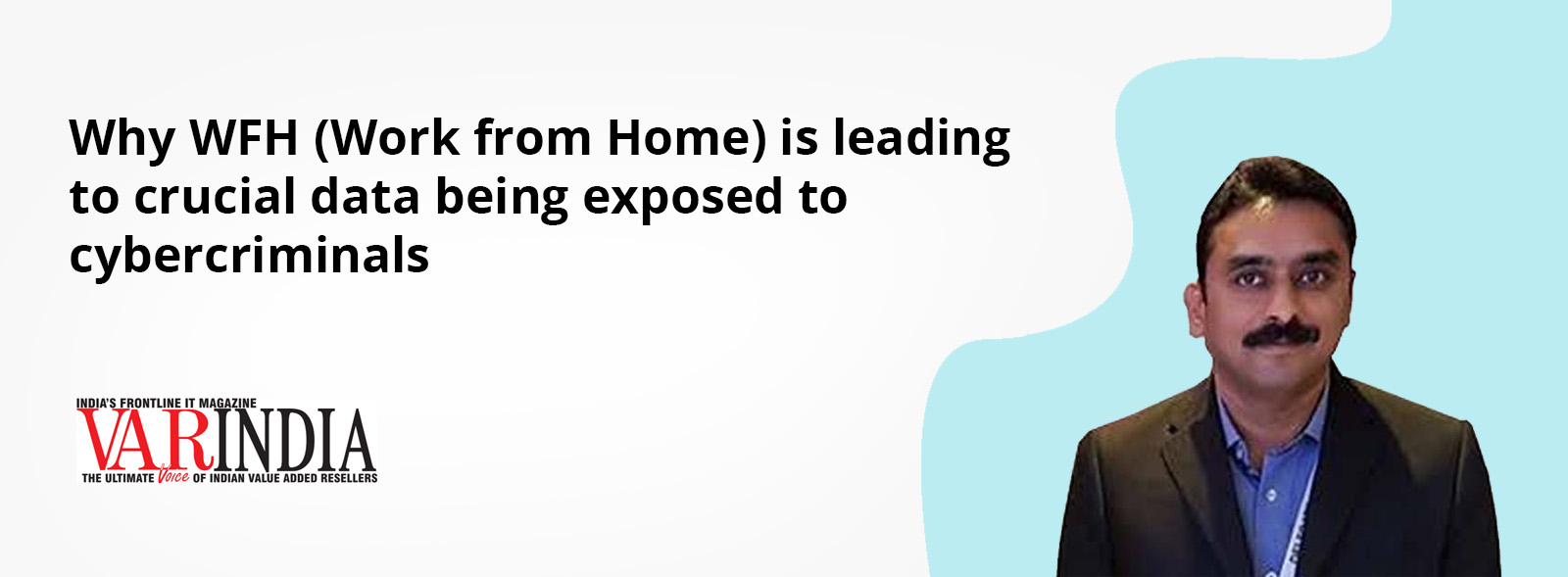
The sudden spread of global pandemic, COVID-19, has changed the entire lifestyle of every individual and especially the work front. The ongoing lockdown to curb the spread of the virus has compelled people to adopt Work from Home (WFH). Not only are people trying to cope up with this new normal, but the situation has also thrown a challenge to the technology partner community to gear up to meet the challenges and demands of the present situation. In a chat with VARINDIA, Subbaram Gowra, /Managing Director, Gowra Bits & Bytes, discusses about the rising demand of remote work, challenges of WFH, Remote Work Solutions, etc.
There is an unprecedented spike in remote work today. How are your customers geared up for this new age of remote workforce?
There are some interesting discussions happening around this aspect, more than the customers alone, we as an ecosystem or an industry must be geared up for this challenge now and for the unforeseen/uncertain future.
As a leading solutions provider, how is Gowra Bits & Bytes geared to address the growing adoption of Work from Home (WFH) challenges?
As an end-to-end System Integrator, we have dedicated SMEs (Subject Matter Experts) with in-depth hands-on experience cutting across areas like Network Transformation, Backup Automation, Information Security, etc. Till now, we have orchestrated and even successfully delivered more than 200+ turnkey IT Infrastructure projects, the nature of them being mostly complex. This experience helped us better understand the challenges and quickly come up with cost effective WFH (Work from Home) solutions.
In your view, what are some of the key challenges faced by employees while working remotely, especially in India? How are you working with Dell Technologies to help your customers sail through these challenges?
What I feel is that it is more to do with a sudden culture change (like work distractions, motivation levels, time management, etc.). Of course, the internet speed and the quality of the service delivered by the local ISPs does matter a lot too for effective work delivery. The advantage of working with Dell Technologies is that they have a huge portfolio of solutions with workstations, laptops, thin clients or deploying “VMware Workspace One” solutions.
Employee experience and productivity is becoming extremely important while enabling Remote Work solutions. Therefore, RWS is not just about devices but the entire ecosystem like displays and right peripherals too. What is your take on it?
It really matters what the budget or maturity of the customer is. The huge portfolio of products and solutions from Dell Technologies made our life much easier and as a System Integrator, all we needed was an absolute clarity on the scope of work and challenges.
Working Remotely is also leading to crucial data being exposed to cybercriminals. How are you supporting your customer’s business-critical technology needs with Dell Technologies solutions?
Traditional, RDP or VPN Solutions which are normally used as a WFH solution are not full proof and secure. Luckily, we have various options like Multi-factor Authentication, Encryption and Application Access Gateway Solutions, which could be used as stand alone or in combination, depending on the customer’s challenge or the scenario in a way which enables users working from any network be IT trusted LAN or untrusted WAN or internet or mobile network to securely access corporate resources without requiring any network changes.
Subbaram Gowra, Managing Director, Gowra Bits & Bytes
Want to know how our solutions can help your business?

Best Infrastructure Partner of the year 2021

SME Channels Super Hero Award - 2021

ISV Infra Champion 2021 Award

Channel World Premier 100 Honoree 2021
Best Infrastructure Partner of the year 2020

ITPV Premier Partner Leadership Award 2020

ITPV Business Leader Award 2020

Covid-19 Superhero Partner Award 2020
Best Infrastructure Partner of the year 2019

Channel World Premier 100 Hall of Fame 2019

Channel World Premier 100 Honoree 2019

ITPV Business Leader Award 2019
Magellan Anchor Award for the year 2018 - Platinum Partner with Highest Growth in Revenue

Enterprise Business Partner 2018-19

SME Channel Award 2018

SME Channel Award 2017

Channel World Premier 100 Honoree 2018
Most Consistent Business Partner for the year 2017

Channel World Premier 100 Honoree 2017
Emerging Business Partner 2016-2017

Top-50 Channel Partners of INDIA by SME Channels

Premier 100 – 2016 by Channel world
Symantec - Emerging Partner 2014

Top Solution Provider (Server & Storage) of INDIA for 2014 by CRN Excellence

Top 10 SME Solution Provider 2011-2012 by SME Channels

IBM GAME Changer (Best SI Partner) for 2010-2011 – Southern Region (Non Metro)

Best Mid – Market Partner – Southern Region 2009-2010

Best Performing Partner South East System X 2008

Best Upcountry Partner 2007-2008 Southern Region